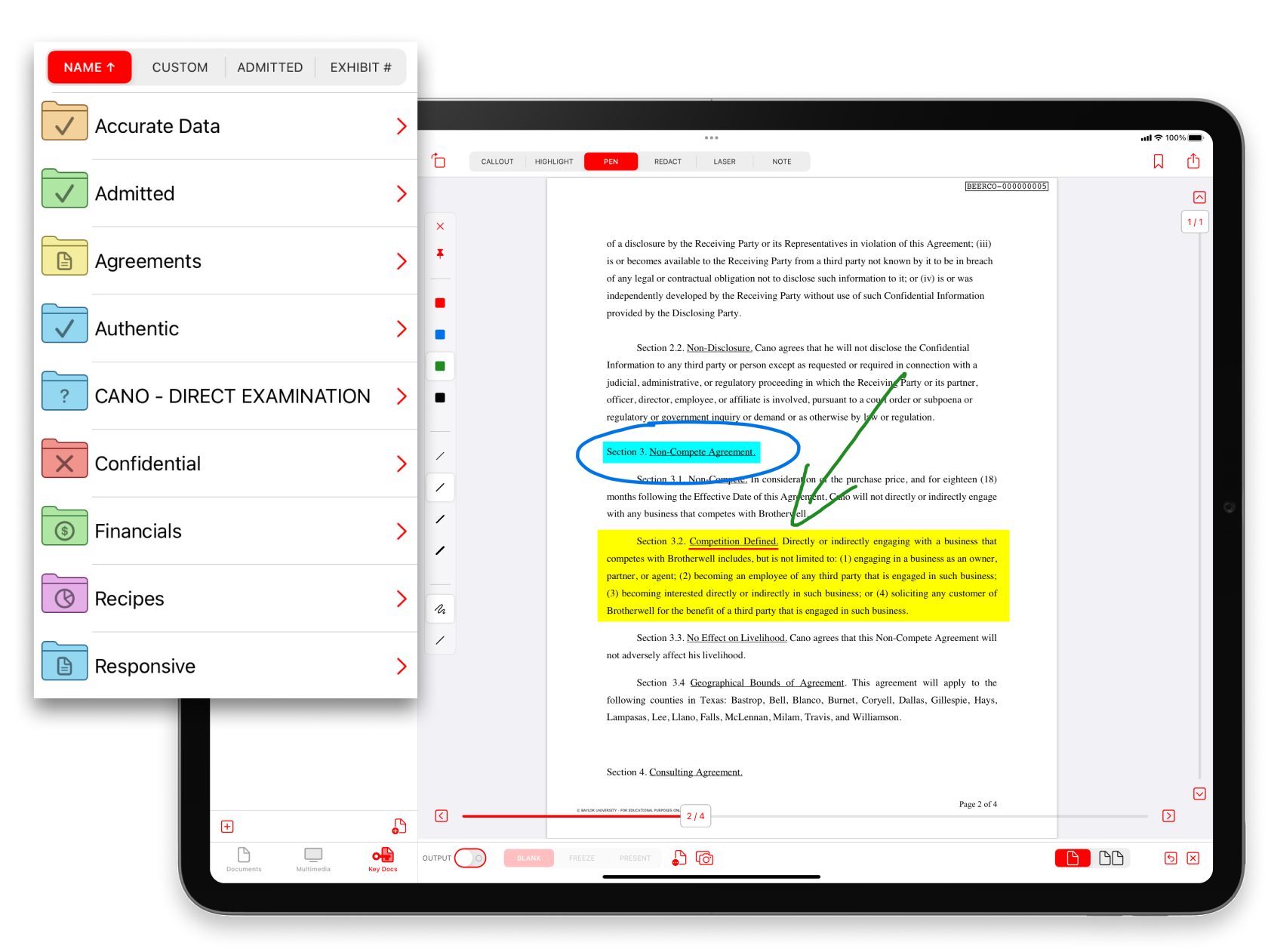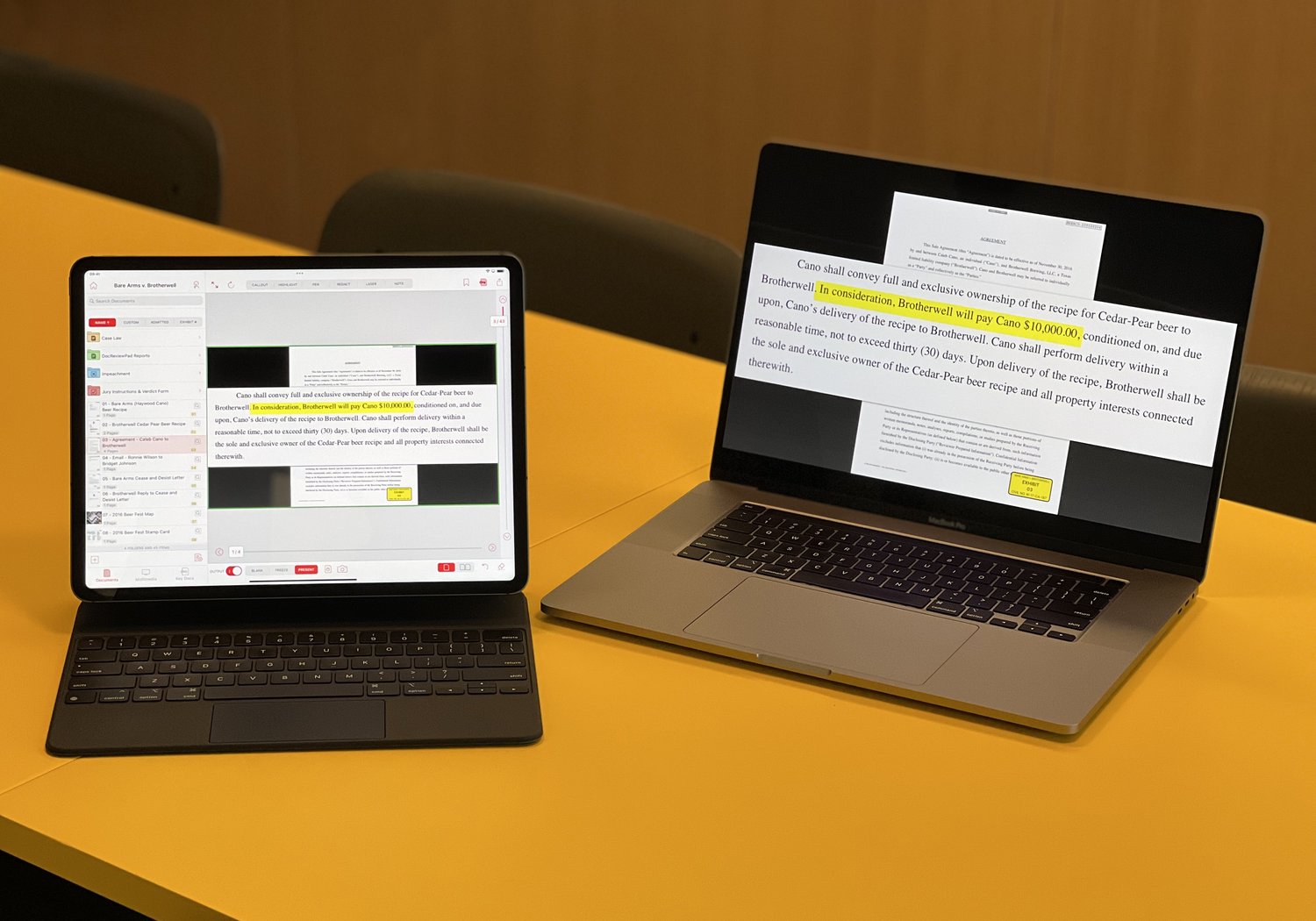
DocReviewPad and TrialPad now automatically read and index every document in a case in the background, including documents that were never OCR’d, the moment they're imported. There's no setup, no manual OCR step, and no waiting. Search finds the actual content of every document, not just file names and Bates numbers. Search also got smarter: it's no longer limited to exact-phrase matches, and results come back dramatically faster.
This works the same way in both apps, so nothing changes about how a customer moves from reviewing documents in DocReviewPad to presenting them in TrialPad
How Homeboy Industries Uses the LIT SUITE to Fight for Justice
Homeboy Industries is the largest gang-intervention and rehabilitation program in the world. Based in Los Angeles and founded by Fr. Greg Boyle, the organization has spent more than three decades offering formerly gang-involved and previously incarcerated men and women a way back in — through job training, tattoo removal, mental health services, legal support, and, above all, the belief that people are more than the worst thing they've ever done.
Legal support is where Joseph Salinas comes in. As part of Homeboy Industries' legal team, Joseph works cases for clients who, in his words, would otherwise be left to navigate "a system that is broken, favors those who have financial resources, and leaves those who can't afford decent legal help or even advice in the dark."
One recent case shows exactly what that fight looks like, and how TrialPad and ExhibitsPad became essential tools in winning it.
A Tool Left Behind
The WhitDocReviewPad and TrialPad now automatically read and index every document in a case in the background, including documents that were never OCR’d, the moment they're imported. There's no setup, no manual OCR step, and no waiting. Search finds the actual content of every document, not just file names and Bates numbers. Search also got smarter: it's no longer limited to exact-phrase matches, and results come back dramatically faster.
This works the same way in both apps, so nothing changes about how a customer moves from reviewing documents in DocReviewPad to presenting them in TrialPad:
The case centered on a commercial burglary charge, with the prosecution's evidence resting heavily on a pry tool recovered from the scene. But when Joseph's team pulled the arresting officer's body-camera footage, they found a problem: the officer had removed the tool without proper protective handling, then placed it, unpackaged and unlabeled, in the trunk of his patrol car, where it was exposed to the summer heat for the remainder of his investigation.
That single lapse opened the door to a serious challenge. If the evidence hadn't been preserved, packaged, or documented the way department policy required, could the prosecution really vouch for its reliability?
Building the Motion
Joseph's team used TrialPad to go through the body-cam footage frame by frame, capturing the exact moments that mattered: the officer handling the tool without proper protective equipment, setting it down among personal gear in the trunk, and never producing a record of when, or whether, it was ever properly packaged, sealed, or logged into evidence.
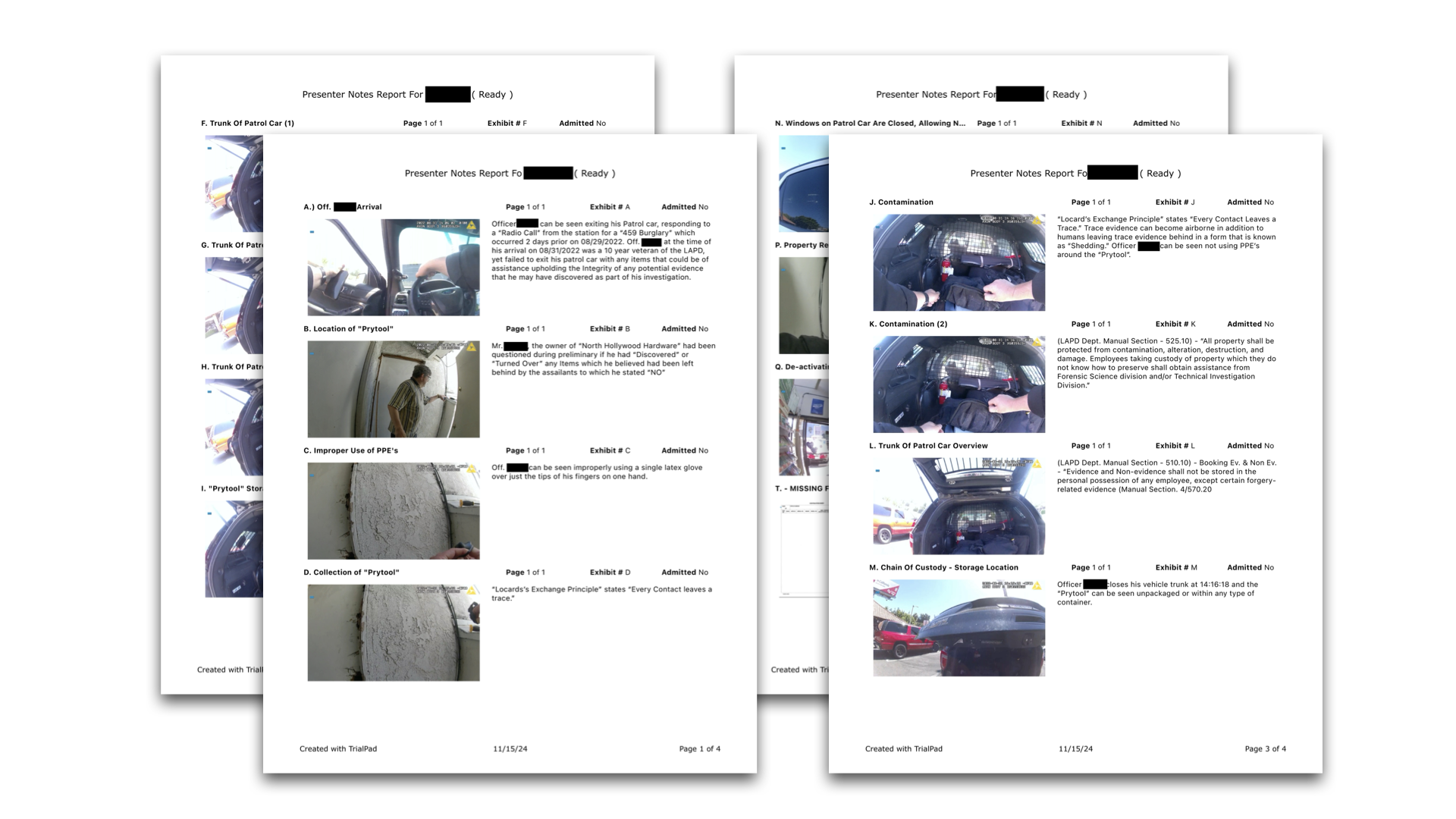
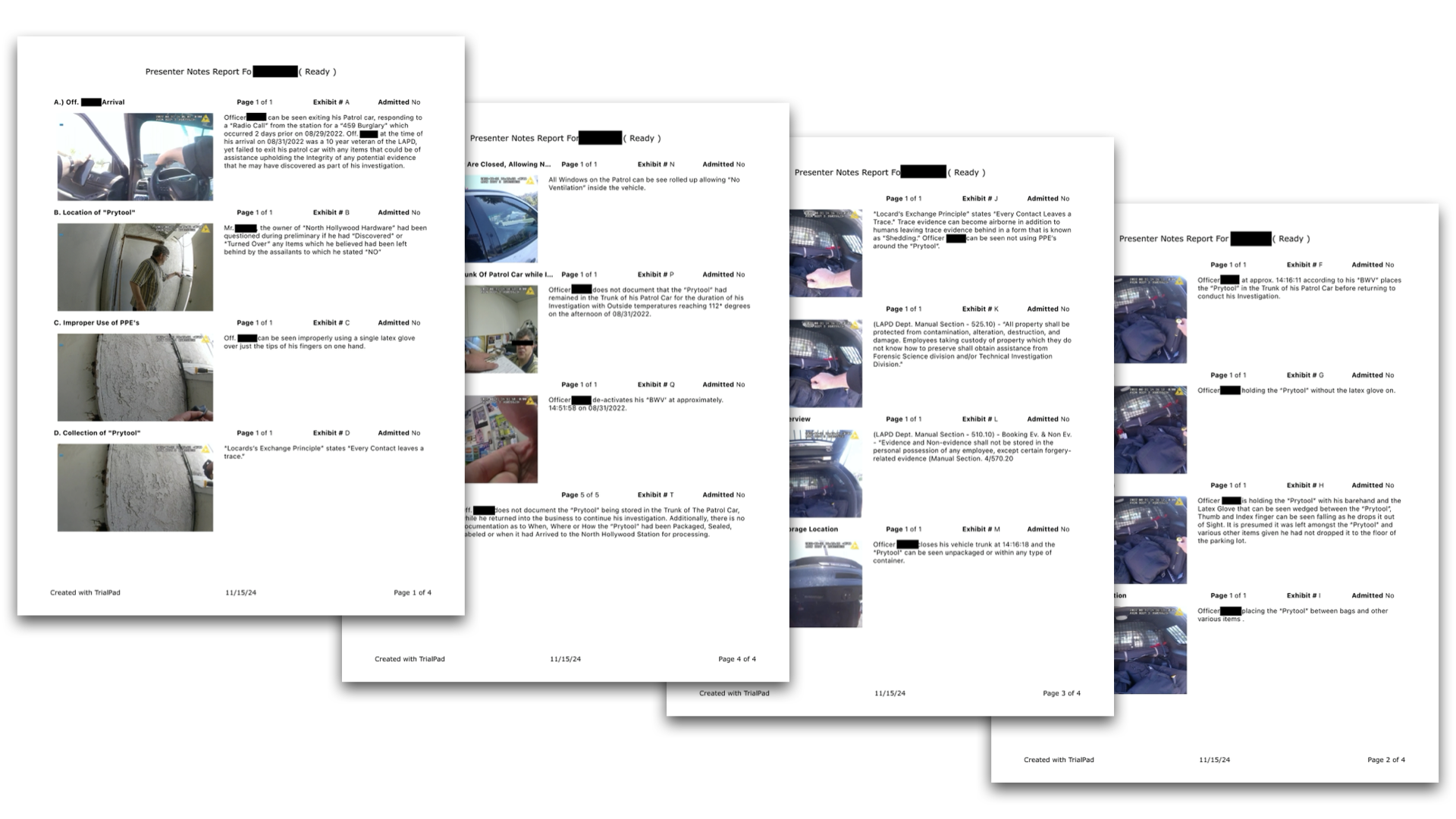
Each moment became its own exhibit. Using TrialPad's exhibit stickers, Joseph's team tagged and numbered every frame so the sequence could be laid out clearly and in order, rather than buried inside hours of raw footage. ThePresenter Notes attached to each exhibit tied what the footage showed back to the department's own evidence-preservation policy, and to the basic scientific principle that every contact leaves a trace. The officer's own handling could have introduced contamination the DNA analysis later couldn't rule out.
Laid out together in the Presenter Notes Report, the exhibits told a simple story: evidence left unpackaged for hours in extreme heat, no documentation of when or how it was ultimately booked, and a DNA result showing multiple contributors — any one of which was enough to raise real doubt about the evidence's integrity. That report became the foundation of a Penal Code 1538.5 motion to suppress the evidence from being used at trial.
The motion worked. Rather than proceed to trial on compromised evidence, the district attorney agreed to community service instead of prison time.
Why It Matters
For a legal team representing clients who often have no other advocate, that outcome is the whole point. As Joseph put it: "TrialPad and ExhibitsPad were essential components we used to help him out."
Homeboy Industries' legal team doesn't have the resources of a prosecutor's office or a corporate firm. What they have is the same evidence, the same footage, and the same policies everyone else works from — and the tools to hold it together clearly enough to make a judge listen. That's what TrialPad and ExhibitsPad gave Joseph's team on this case, and what they'll keep giving Homeboy Industries the next time someone needs an advocate in their corner.